Spis treści
Correct visualisation plays a key role in interior design, architecture, films, computer games and many other fields. The available tools also offer many possibilities for visualising lighting, but unfortunately they involve certain risks.
The potential of the available lighting visualisation tools is wide and varied. Here are a few key aspects:
Realistic simulation:
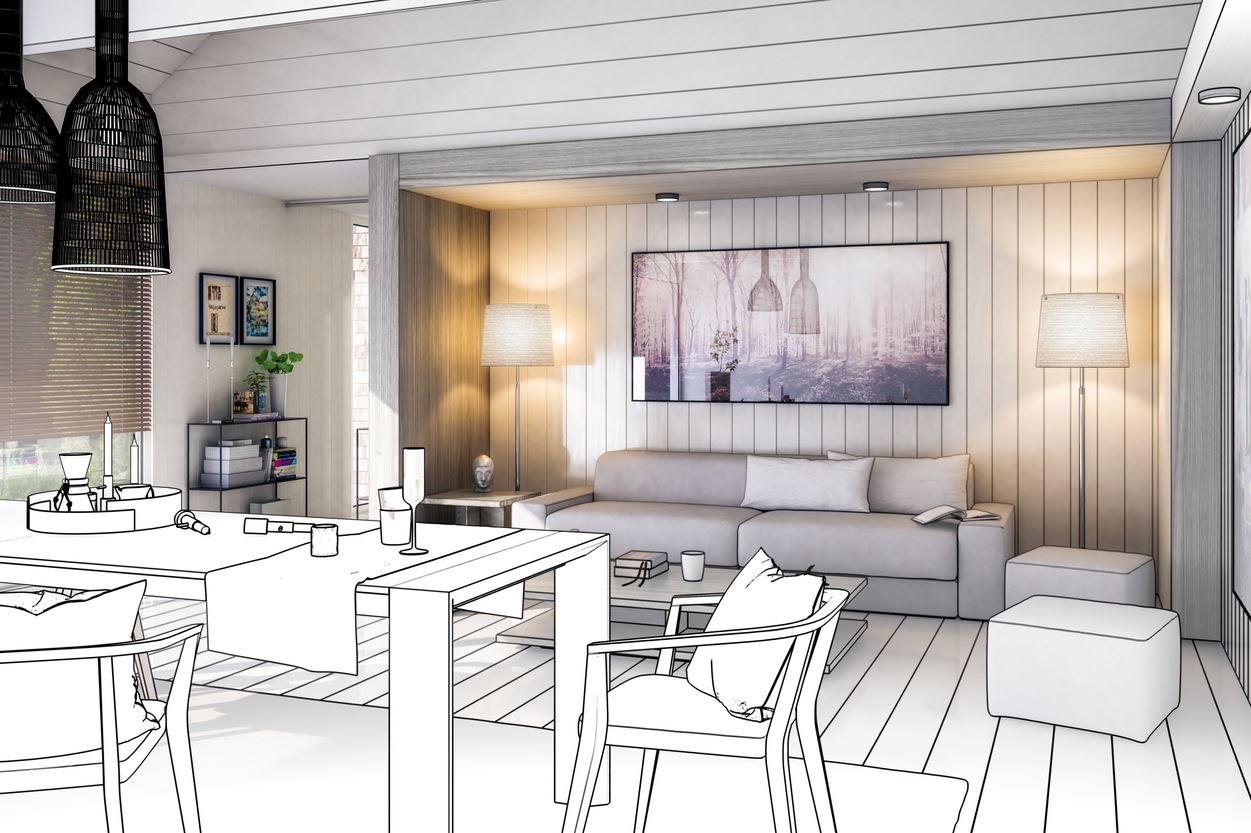
Advanced lighting visualisation software, such as for 3D rendering, allows you to create highly realistic lighting effects. Different types of light, such as sunlight, artificial light, reflections, reflections, shadows, etc., can be precisely simulated. This allows designers, architects, artists and lighting manufacturers to see how lighting affects space and creates atmosphere in an interior.
Optimisation of projects:
The tools for arranging lighting in street furniture allow you to experiment with different arrangements and layouts of lamps and light sources, so that different solutions can be tested virtually. This allows for the selection of the optimal solution and testing it before it is applied in a real environment. This saves time and costs by eliminating the need for physical testing of different scenarios.
Communication and presentation:
Lighting visualisations can be used to communicate and present design concepts to clients, colleagues and project teams. They help to visualise ideas and visions in a more convincing way than just verbal descriptions. Depending on the purpose of the presentation, more photo-realistic visualisations can be used, especially when presenting interior designs. Nowadays, many interior design programmes offer such possibilities. However, to be sure that the presented interior is well lit, it is also worth testing the solution by analysing it in a lighting design calculation programme. Then our lighting presentation message is not only a beautiful illustration, but also has technical arguments that the project will work.
Education and science:
Tools for visualising lighting are also used for educational and scientific purposes. Students and researchers can explore different lighting techniques by studying their effects on different materials, colours and textures. Advanced BIM programmes not only help to select visual effects, but are also calibrated to analyse the solution in terms of compliance with various lighting standards. Computer simulations are now frequently used in science to support the research process.
When using lighting visualisation tools, certain risks should also be considered:
Over-reliance on visualisation:
There is a risk that designers and architects may rely too heavily on visualisations of lighting, losing sight of the practical aspects of implementation in a real environment. Visualisations can only approximate reality, and differences in material, textures and specific lighting settings can affect the final result.
Cost and complexity of the software:
Advanced lighting visualisation tools can be expensive, both in terms of purchasing licences and the required computer hardware. In addition, using these tools may require specialised knowledge and skills, which increases the entry threshold for new users.
Lack of dynamic aspect:
Lighting visualisations are usually static images or animations that do not take into account the change in lighting conditions in real time. Lighting effects can vary depending on the time of day, the weather and other factors that are not easily represented in static visualisations.
In conclusion, visualisation tools for street furniture lighting offer great potential for designers, architects and artists, enabling them to create realistic lighting visualisations. However, it is important to remember their limitations and the need for careful analysis and implementation in a real environment to achieve the final lighting effect.